Monthly Archives: October 2014

Easy Applesauce in a Crock Pot or Slow Cooker

Since I grew up in the state of Washington, I cannot help but think of apples when I think of fall.  During my childhood, the change of weather from summer to cool and crisp days meant that apple treats would soon be on their way.  My siblings and I collected apples from the trees in our yard and brought them to my mother as a subtle suggestion. She received them warmly and made pies, apple crisp, and heavenly cinnamon apple sauce.

My mother always made her applesauce in a dutch oven on the stove, which I also did for many years.  This method required remembering to check on the apples intermittently over a long period of time in order to stir them and to make sure the liquid in the pot had not completely evaporated.

This year I decided to see if I could simplify the process by using my slow cooker instead. Needless to say, it turned out great!  I almost felt guilty about how easy it was. Here is what I did:
apple

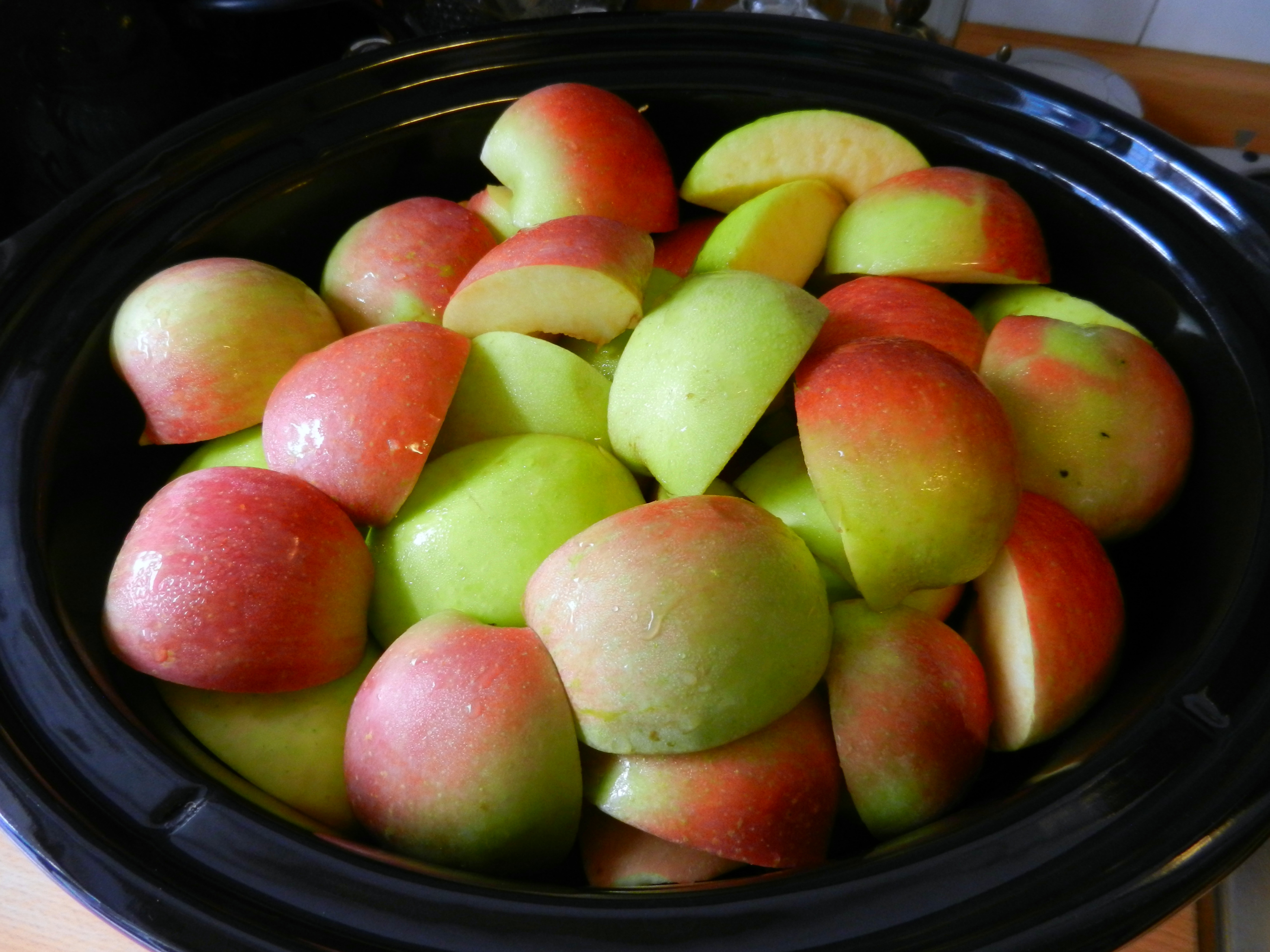
1.  Quarter and core apples (I use several varieties) and place in your crock pot.  The number of apples will vary depending on the capacity of your slow cooker.

2.  Add 3/4 cup of water, 1 tsp. lemon juice, and  3-4 cinnamon sticks to the apples.

3.  Put on the lid and turn your slow cooker to HIGH for 4 1/2 to 5 hours.  Do your laundry, read some books to your kids, or take a nap.  When you wake up, your house will smell like fall, and your family and friends will think you spent all day in the kitchen.
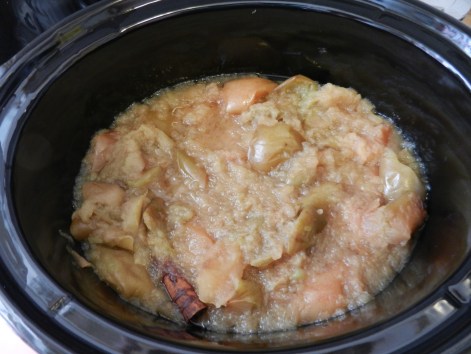
DSCN6604

4.  Turn off the cooker, and gently spoon small portions of the cooked apple mixture into a food mill fitted with the fine disk and placed over a bowl.  Remove and discard the cinnamon sticks as you come across them.  Turn the crank, and the skins will separate from the sauce.  If the mill seems hard to turn, give it a few turns in the opposite direction before resuming.
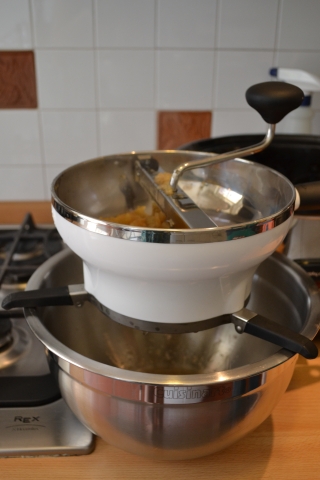
masher

5.  Wait for the applesauce to cool before placing in freezer containers or your fridge. The sauce will keep up to a week in the refrigerator or for several months in the freezer.  I don’t add any sugar to my sauce, but you can add a little brown sugar at the end if you feel it is too tart.  The flavor and tartness can vary quite a bit, depending on the types of apples you use.

DSCN6605

A Few Notes:

If you like your applesauce to be very light in color, peel the apples before cooking them.  The skins impart some color to the sauce.  If you do not have a food mill, you can use a potato masher instead.  Just be sure to PEEL, quarter, and core the apples before cooking.  Then mash the cooked apples to the consistency you like.

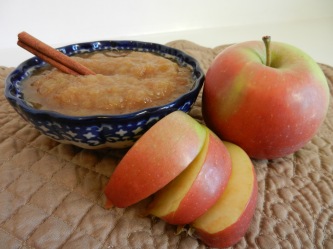
Easy Applesauce in a Crock Pot
  • Difficulty: easy
  • Print

DSCN6606

Ingredients:  

  • Several pounds of apples (various types), cored and quartered
  • 3/4 c. water
  • 1 tsp. lemon juice
  • 3-4 cinnamon sticks

Add all ingredients to a slow cooker, cover, and turn to HIGH for 4 1/2 to 5 hours. When the apples have cooked down, turn off the cooker. Place a food mill which has been fitted with the fine disk over a bowl. Slowly spoon in the cooked apples and turn the crank to push the pulp into the bowl below. Remove and discard the cinnamon sticks as you come across them. Every once in a while, turn the crank in the opposite direction to scape the peels away from the disk.

Stir in a little brown sugar if you think the sauce is too tart. Allow to cool to room temperature. Place in the refrigerator for up to a week or store in containers in the freezer for several months.

Ligurian Pasta with Pesto, Tomatoes, and Potatoes

In honor of Columbus Day this week, I decided to post a recipe for a typical dish found in the region of Liguria. Whether you are a fan of Cristoforo Colombo (Christopher Columbus) or not, he is an important figure in Italian history. The Ligurian city of Genoa was his birthplace and the birthplace of pesto alla Genovese. Travellers consider Liguria to be the Italian Riviera. One can hardly resist visiting picturesque Portofino, the Cinque Terre (five pastel-washed towns perched high above the sea), and my personal favorite, Portovenere.

It was on a sailboat trip to Portovenere and the Cinque Terre that I learned how to make this recipe from our skipper, Daniella.  According to Daniella, this pasta dish is normally served with tomatoes in the summer and potatoes in the winter.  Since she likes both, she taught me how to make it with tomatoes AND potatoes. It might sound strange to put potatoes with pasta, but there are quite a few dishes in Italy with potatoes in the sauce.  My family loves it; just give it a try!

Ligurian Pasta with Tomatoes, Pesto, and Potatoes

  • Servings: 4
  • Difficulty: easy
  • Print

Ligurian Pasta

Ingredients:

  • 1 lb. (450 – 500 g.) fresh trofie or linguine pasta (12 – 14 oz. dry pasta can be substituted)
  • 1-2 medium potatoes
  • ½ cup pesto (see recipe below or you could use prepared pesto – but remember, “fresh is best”)
  • 2 cups cherry or grape tomatoes, sliced in half
  • 1/2 cup reserved pasta water
  • Salt and pepper to taste
  • Freshly-grated Parmesan for serving

Directions:

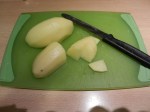
Bring a large pot of water to boil over high heat.  Add about 2 teaspoons of salt per quart of water. (Unsalted pasta water makes the pasta bland. — (Don’t worry, you won’t ingest all of that salt!) Peel the potato.  Slice in half lengthwise, then slice those pieces again lengthwise (see picture below). Cut small quarter-inch thick slices of the potato and add to the water that is coming to a boil.*  Slice the 2 cups of tomatoes in half and set aside.  When the water boils, add the pasta and cook until al dente.  Package instructions for pasta usually tell you to cook the pasta for longer than it needs, so keep checking it. When ready, reserve about 1/2 cup of the pasta water and then drain off the rest. Immediately put the noodles and potatoes in a warmed bowl.  Add the 1/2 cup of pesto and then some pasta water a little at a time to make the pesto mix in more easily.  (You probably won’t need all the extra pasta water.) Add the fresh tomatoes and fold in.  Add salt and pepper to taste. Grate a little Parmesan over each serving at the table. Enjoy!

*If you use dry pasta, add the potato along with the pasta after the water reaches a boil.  Dry pasta takes longer to cook than fresh pasta.

It’s as easy as this:

Pesto alla Genovese

  • Servings: yields 3/4 - 1 cup
  • Difficulty: easy
  • Print

Pesto alla Genovese

Ingredients:

  • 1/4 cup pine nuts
  • 2-3 garlic cloves (NOT peeled)
  • 2 cups basil leaves (washed and dried — salad spinner works well for this)
  • 1/4 – 1/2 tsp. sea salt (Pecorino is saltier than Parmesan so amount will vary with cheese used.)
  • 1/2 cup olive oil (Ligurian is best for this recipe, but at least use a good quality olive oil.)
  • 3/4 cup freshly grated Parmesan cheese
  • 1/4 cup freshly grated Pecorino Romano cheese (regular Parmesan can be substituted)

Directions:

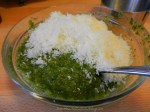
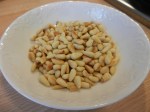
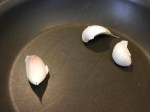
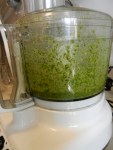
In a small skillet, toast the pine nuts on medium heat until slightly brown and fragrant. Set aside to cool.  While the pan is still warm, toast the garlic cloves (still in their skin) in the same skillet.* Allow to roast on the heat for about 6-8 minutes, turning occasionally. Garlic is done when it is fragrant and just slightly soft. Once the garlic is cool enough to handle, peel off the skin.  In the bowl of a food processor, put the basil leaves, cooled pine nuts, cooled garlic cloves, and salt.  While the machine is running, add the olive oil in a steady stream. Stop to scrape down the sides of the bowl and pulse again to be sure everything is combined. Remove the puree to another bowl and stir in the Parmesan and Pecorino. Cover the surface of the pesto with plastic wrap to prevent discoloration and place in the refrigerator until ready to use.**

Try pesto on sandwiches or pasta.  It works well as an appetizer when spread on toasted bread and topped with a slice of tomato.

*I cook the garlic a little just to mellow the flavor.  If you don’t have the time, you can just peel it and add it to the food processor without cooking it at all.

**Pesto may be frozen in small portions for several months or kept in the refrigerator for a few days.

It’s as easy as this:


A Weekend at the Arezzo Antique Fair


girl reading

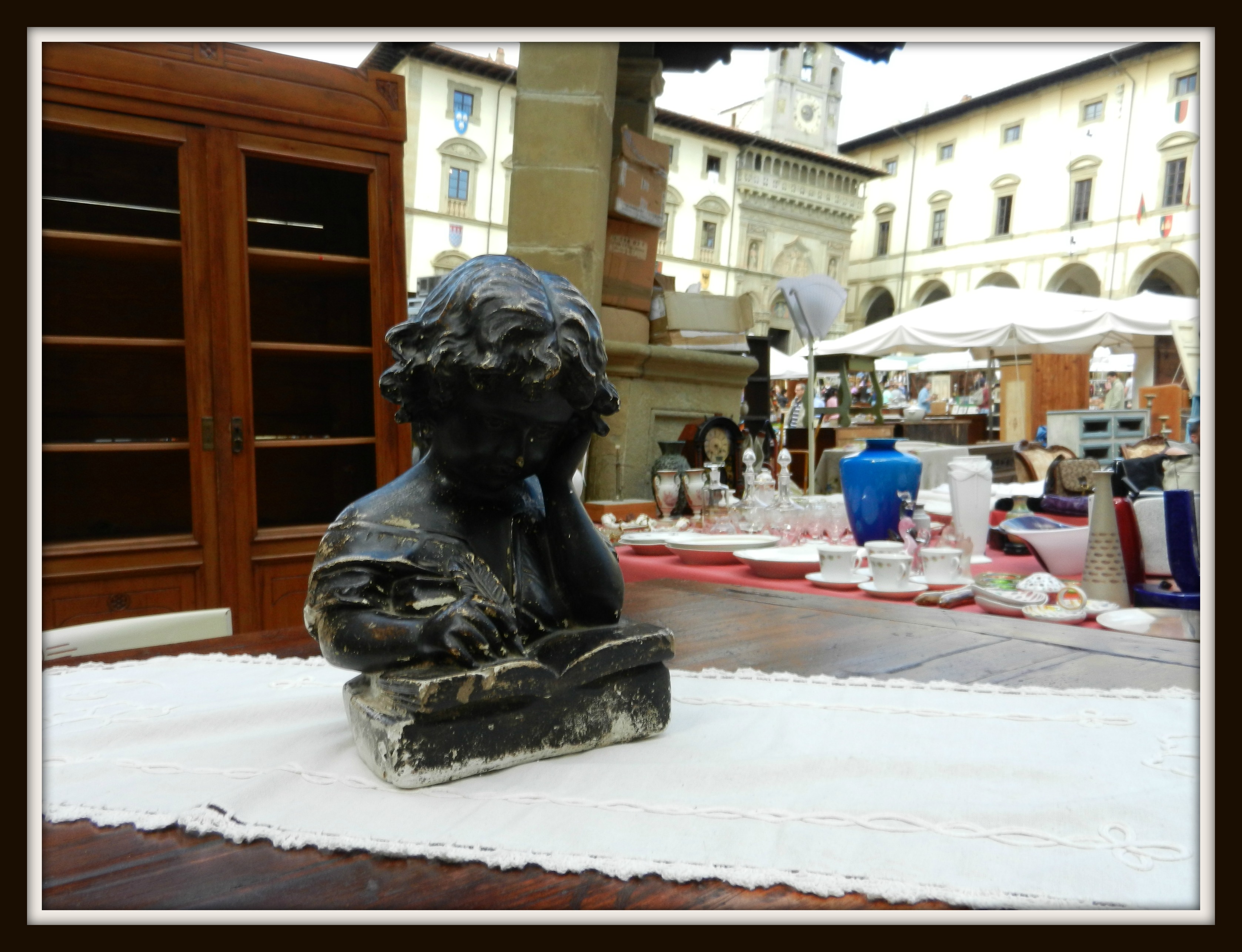
Tuscany is perhaps the most visited region of Italy, and now you may find just one more reason to spend some time there. On the far eastern side of Tuscany sits the historic town of Arezzo, home of a monthly antique fair (Arezzo Fiera Antiquaria).  Fall in Italy is a wonderful time to take a DSCN6410drive because of the cooler temperatures but abundant sun. Over the weekend, I decided to enjoy the season and make a visit to this special market. The trip from Rome took about two driving hours.  My husband and I knew when we were close because steady streams of people were headed in the direction marked “Centro.”  We set off in the same direction, making the typical stop for a cappuccino and cornetto, and then continued on our quest. Once we reached Corso Italia, a sea of tents and tables wound their way up the cobbled streets to Piazza Grande, the center of the market. From the main piazza, stalls spiraled out through the Renaissance passageways, making the hunt for treasure all the more fun.
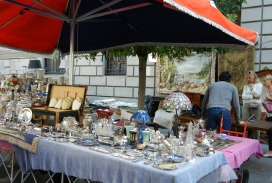
One weekend a month, over 500 vendors from around Italy bring their wares to Arezzo.  From linens for one euro to marquetry furniture and paintings for thousands, there is something to tempt almost everyone. Cameos, pearls, fur collars, and vintage Louis Vuitton purses spark the interest of those seeking timeless fashion.  Antique pottery from Gubbio and Deruta draws the attention of others.  One vendor specializes in restored meat slicers. (Yes, you read it right — these are considered by some as a “necessity” in a land where salami is king.)  Another vendor just sells silver in every shape and form imaginable. Yet another didn’t seem to sell the same of anything; towel bars, rusty hinges, and copper pots spread across his table.


This slideshow requires JavaScript.


If antiques aren’t your thing, there are plenty of other clothing stores, designer jewelry shops, artisan handicrafts, and some beautiful Renaissance architecture to enjoy.  Giorgio Vasari, famous author of “Lives of the Painters,” was born in Arezzo, and his home can be visited on the north side of the city.  Georgio Bernigni’s Academy Award-winning film,  Life is Beautiful (La vita é bella) was filmed here (mainly in Piazza Grande) and gives testimony to the enduring charm of the city.

When you tire of wandering the streets, head to the 14th Century Church of San Francesco. Pews await you that will allow you to take a respite while enjoying Piero della Francesca’s cycle of frescoes, Legends of the True Cross. This is his largest and one of his finest works. For the hungry and general foodies, restaurants abound in Arezzo, specializing in delicious Tuscan fare.  Since Italian food is very regional, be sure to order something local to get the best quality.  Try a dish with black truffles or pappardelle al cinghiale (wide egg noodles with wild boar).  If you purchase one of those meat slicers, you can buy some finocchio salami and give it a test.  (Finocchio is a Tuscan salami with fennel — and my absolute favorite in Italy!)

The market is held every first Sunday of the month as well as the preceding Saturday.

Where: Arezzostall

Dates for the Remainder of 2014:

1st – 2nd November
6th – 7th December

How to get there:

There are regular regional trains that stop in Arezzo on the line from Rome to Florence.  By car, the trip takes about 2 hours from Rome or an hour and 10 minutes from Florence.

Fashion in the Fall — A Visit to the Micol Fontana Foundation

Fontana Foundation DressToday I headed for the heart of Rome to visit the Micol Fontana Foundation. Though I had a map and the address, I walked up and down the street several times and finally had to ask for directions.  The postman pointed me to a doorway with no sign indicating the proper address or a sign for the foundation.  On trust, I entered the building indicated and wandered down a dark corridor, up a set of stairs, and then rang a tiny buzzer next to another nondescript door.  When a woman came to greet me at the door, I knew that I was in the correct place. Bookshelves lined the walls in the tiny entry and glamorous women dressed in elegant gowns stared down at me from posters that lined the walls and touched the ceiling.  I recognized some of them as the female jewels of the 1950s and 60s. Ava Gardner, Grace Kelley, Elizabeth Taylor, and Audrey Hepburn all donned dresses with yards of fabric decorated with lace, beads, and tucks to highlight their figures. In another corner, I noticed a picture of Jackie Kennedy in a ball gown standing next to President John Kennedy.

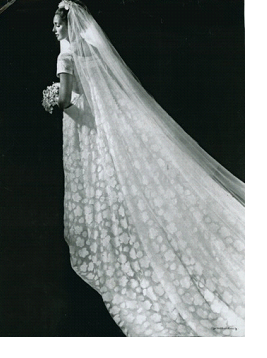
The woman then guided me out of  the first room and along a hallway.  To one side, I passed silk wedding gowns with venetian lace and rows of tiny covered buttons reaching from the collars down the front or back of the dresses.  On the other side of the passageway were dresses more appropriate for a Hollywood cocktail party or an evening out at a club as envisioned in the movies of the 1950s.  Finally, I reached a light-flooded room with a wall of windows leading to a lovely terrace, hidden from the busy cobbled streets. This room was like a personal library of fashion by the Fontana sisters.  Books containing and commemorating their work over the years lay scattered across a table.  On the walls were drawings of their designs and pictures of the sisters with both family and some of their most famous clients.

Who were these sisters who became so sought after by the elite of Rome, Hollywood, and Washington, D.C.? The three Fontana sisters, Zoe, Micol, and Giovanna, grew up just outside Parma. Their mother was a seamstress as was their grandmother. As one sister, Micol, stated, “sewing was in our blood.”  From the age of 10, Micol was doing fittings for her mother’s clients. They would come to see her on Sundays after the 5:00 a.m. mass. Though their mother had a steady stream of customers keeping them busy, the sisters became restless as they grew older. With the approval of their parents (which didn’t come easily in those days), they set off for the city. When they arrived at the train station, they didn’t know whether to go to Milan or Rome, so Zoe, the oldest, decided to choose by whichever train came first.  It happened to be a train to Rome.

The sisters set up a workshop in Rome and soon were busy with work from the elite of Italy. Their big break onto the world stage of fashion came with the commissioning of the wedding dress of Linda Christian, a movie star, to another American actor, Tyrone Power.  They were married in Rome with cameras from all over the world snapping pictures and publishing them in magazines and newspapers.  From the well-publicized Rome event, the sisters gained the attention of Hollywood and eventually the First Lady of the United States, Jackie Kennedy.  Micol recalled how the bell rang one evening at her studio in New York, and to her surprise, it was President Kennedy and the First Lady.  That was the beginning of a long relationship with the Kennedys.  Jackie, evidently, would pick several dresses, and then her husband would help her choose which one to wear at which event.

Though the client list was extensive and impressive, my attention drifted to the beautiful dresses in the third room.  From the table, I could see skirts in all hues glittering in the light.  Haute couture gowns designed by the Fontana sisters from the 1940s to the 1990s lined the walls.  One of Micol’s nieces pointed out a dress made for Audrey Hepburn.  Tiny beads of venetian glass (in the days before swarovski crystals) were stitched in scroll patterns around the silk chiffon skirt.  The dress came from the period of time when Audrey Hepburn was filming Roman Holiday and her romance with Gregory Peck.  Behind me, another full length dress of blue silk velvet caught my eye. Flowers fashioned after persian floral designs stretch across its bodice and down to the skirt in threads of real gold.

As I prepared to leave after my tour, I felt a bit sad.  The days of such beautiful dresses and craftsmanship may be coming to an end.  It is now difficult to find the materials and the craftspeople to create such beautiful beadwork and gowns — even in China. The artisans who labored over these creations were skilled Italians, but the workshops are now empty.  The task set before the Micol Foundation is to keep their legacy alive through teaching seminars and holding competitions.

Though not open to the public on a daily basis, tours can be arranged through the foundation website.  It is an opportunity well-worth pursuing.  http://www.micolfontana.it/eng